
dnf
Exclusive: I relate to Srikant Tiwari: Sumit Arora on The Family Man, working with Raj & DK & more_我的网站

A | Sumit Arora has come a long way, from humble beginnings in the television industry to films and now OTT. He is the man behind widely quoted lines from Stree, The Family Man and Jawan among others. In an exclusive conversation with Filmfare, he opens up about coming to Mumbai at 17 with film dreams, finding his footing through TV, collaborating with Raj & DK, Suman Kumar and Farhan Akhtar and writing dialogues that become pop-culture favourites.
He also opens up about the changing value of writers in the film industry, crafting massy moments for Shah Rukh Khan, and the excitement of seeing his lines live forever in the audience’s memory.
Excerpts:
Tell us about your journey from a small town in India to one of the most prominent voices in Bollywood...
We can write a book on that journey. I was 17 when I came to Bombay with the dream of writing for films. But getting into films was not easy. I did not have any experience or any course in screenwriting. I got a job as a trainee writer in TV and that's how my journey started. But I left that job because I wanted to do relatable shows. Then I found those shows - Chhoona Hai Aasmaan, Dill Mill Gayye and Sadda Haq. All these shows resonated with me. At the same time, I also kept trying for films. TV was a stopgap arrangement for me. Eventually, I ventured into films in 2015 and my first film Stree came out in 2018. The love for the dialogues still keeps coming in. That changed my life. And immediately after that The Family Man came in 2019. The journey from there has been like a ride. I am now able to choose the projects that I would want to watch.
Who were some of your inspirations growing up?
I grew up on Hindi literature. Neither on films nor on English literature. Some of my top writers have been Harishankar Parsai, Rajesh Joshi, Ravindranath Tyagi and Gyan Chaturvedi. These are the satirists of Hindi literature and that's why you see a lot of humour in whatever I do.
You have collaborated with Suman Kumar, and Raj & DK multiple times. How has this bond evolved over the years?
We have been working together for almost 7-8 years now. The bond has been great because I understand what they like and they understand my language. They trust me fully with it. It's a collaboration with equal trust and love. For two people to collaborate well and continuously, they have to understand each other instinctively.
What kind of responses are you getting for The Family Man 3?
People have been loving the dialogues and I am getting a lot of messages on them. I got a lot of love over Jaideep's dialogue where he says that one should increase their status but not forget it. A lot of people liked the exchange between JK and Srikant in the jail and Srikant's conversation with his son Atharva about pronouns.
View this post on Instagram
A post shared by Sumit Arora (@sumitaroraa)
Tells us about that pronoun scene...
The idea came from Suman. He has a daughter who talks in that kind of language. Then I had to make it further interesting in terms of dialogue. I tried to look at it from Srikant’s point of view. He is a guy who grew up in Banaras, much like how I grew up in Meerut, Uttar Pradesh, and now I live in Bombay. So, if somebody tells me that ‘she’ is not ‘she’, ‘she’ is ‘they’, how will I react? I tried to tap into that. I relate to Srikant on a huge level. I also come from a small town, so it was easy for me to look at this situation from his perspective.
You had another big release, 120 Bahadur. How was the collaboration with Farhan?
It was a great collaboration because he is very open. As a creative individual, he allows you the free space. He comes from years of experience as a filmmaker, and it reflects in how he looks at a script. Farhan is also a dialogue writer so it was good to have somebody like him as a bouncing board and somebody who is listening to your dialogues. I got a lot of insights into how his process is and I always find it interesting to know how other people think.
You went to the location during 120 Bahadur's shoot. Do you do that for all the shows and films you work on?
Yes, mostly. I do go on the sets, especially in the beginning of the shoot, when the tone is getting set. When you are there as a writer when the characters are being established in the early days of the shoot, you can help or correct them. You can see whether the way you thought the characters will talk or will behave is aligning with how the actors are working. If the actors are bringing in new elements, you can be there as a bouncing board for them. It is nice and essential for a writer to be present in the beginning of the shoot.
Jawan’s dialogues have become pop culture favourites, and Shah Rukh Khan won the National Award for the film. As the dialogue writer, how did you feel when his win was announced?
He should have won the National Award long back. It's totally his win and it was overdue.
Every project comes with its own expectations from a writer. With a film like Jawan, you are writing for SRK and for a director like Atlee who is known for his massy films. So you have to understand both sensibilities. It is very different from something like The Family Man, where you need to deliver a lot of humour, sharp writing and sharp exchanges of dialogues. But for a Jawan, the expectation is that you have to deliver 'mass moments' yet you have to carry your individuality. Mass moments can't feel dated, they have to feel like what today's audience enjoys. I like to write things that I would enjoy watching as an audience.
If I am writing a mass film with a huge star, I will think about how I want to watch a big star today. What kind of lines would I like this star to say and what kind of mass moments would I like to watch as an audience? You have to strike a balance between the sensibilities you have and the requirement of the film. That's how you find an interesting and unique zone.
For years, audiences have remembered iconic lines and the stars who say them, while the writers behind those lines often remained unseen. Is that changing now?
It's always a work in progress. The industry still has a problem internally. They have understood the value of good writing but there is a lot of reluctance towards giving that same value to the writers. People know that we need good writing and without good content we cannot make a hit. Everybody has understood that across the board. But yet, when it comes to remuneration towards the writer, or giving writers respect, they shy away from it. They fall short of it.
When a young writer is delivering something, you should be able to identify it and give it good respect in terms of money and value. You don't need to respect someone after they have delivered 5 hits. Respecting the stature of a person is not equal to respecting writers and writing. This fundamental shift needs to happen.
I interact with a lot of young writers and if I like something interesting, I try to mentor it and help people. This is something that I would have wanted when I was starting out. That people like me, who have some access, help young writers.
What are some of your dialogues you are proud of?
'Woh Stree hai, woh kuch bhi kar sakti hai' from Stree. There are more lines from the film that I like. I put all my heart out in that film. I like quite a few lines from this season of The Family Man and then of course, there is Jawan's dialogue, 'Bete ko haath lagane se pehle baap se baat kar.'
Has the approach towards writing changed post pandemic?
People have too many options and they have gotten used to watching stuff in their homes, on OTT platforms. The whole approach has changed especially when it comes to writing for films. Now you have to write something exciting enough for people to come to theatres to. You have to find such stories.
What was that one turning point in your career that made you believe that you have arrived?
The release of Stree changed everything. I put my complete heart and soul into that film. And it was received well. There was some frustration before that where I felt it's taking too long to reach where I want to reach. But at no point did I feel that I should quit or go back.
Also Read: Farhan Akhtar Brings War Hero Maj Shaitan Singh PVC To The Silver Screen In 120 Bahadur。
为切身感受传统戏曲的艺术魅力,深化青年学子对非遗文化的认知与理解,8月12日下午,南通大学杏林学院姜海之星实践团前往昆曲博物馆开展实地研学实践活动,在参观学习中品读昆曲历史,感悟中华优秀传统文化的深厚底蕴。 活动伊始,在馆内工作人员的带领下,实践团成员依次参观各个展厅。讲解员从昆曲的发展脉络入手,系统梳理了昆曲从起源、兴盛到传承创新的百年历程,阐释了昆曲 "百戏之祖" 的历史地位与独特艺术价值。结合馆内陈列的珍贵文物、历史照片、戏服道具与场景复原,讲解员生动还原了昆曲的唱腔精髓、身段美学与剧本内涵,让成员们沉浸式感受传统戏曲的雅致韵味。成员们认真聆听讲解,驻足观摩展品,在一件件珍贵实物前细细品味昆曲艺术的独特魅力。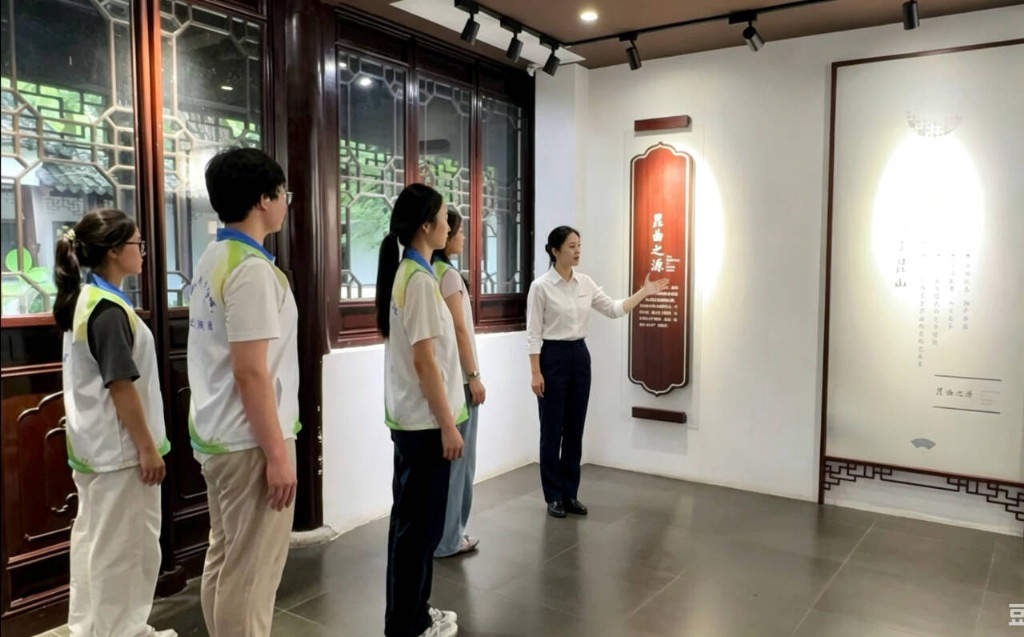 图1博物馆工作人员为实践团作现场讲解
循着艺术的脉络,实践团成员走进昆曲名家展区,认真观摩历代昆曲名家的生平介绍与经典剧目复刻场景,回望一代代戏曲人坚守舞台、薪火相传的感人历程。成员们相互交流观展体会,分享各自对昆曲艺术与非遗传承的理解,在轻松浓厚的学习氛围中深化认知、共学共进,也对非遗技艺 "守正创新" 的时代内涵有了更真切的体会。
图1博物馆工作人员为实践团作现场讲解
循着艺术的脉络,实践团成员走进昆曲名家展区,认真观摩历代昆曲名家的生平介绍与经典剧目复刻场景,回望一代代戏曲人坚守舞台、薪火相传的感人历程。成员们相互交流观展体会,分享各自对昆曲艺术与非遗传承的理解,在轻松浓厚的学习氛围中深化认知、共学共进,也对非遗技艺 "守正创新" 的时代内涵有了更真切的体会。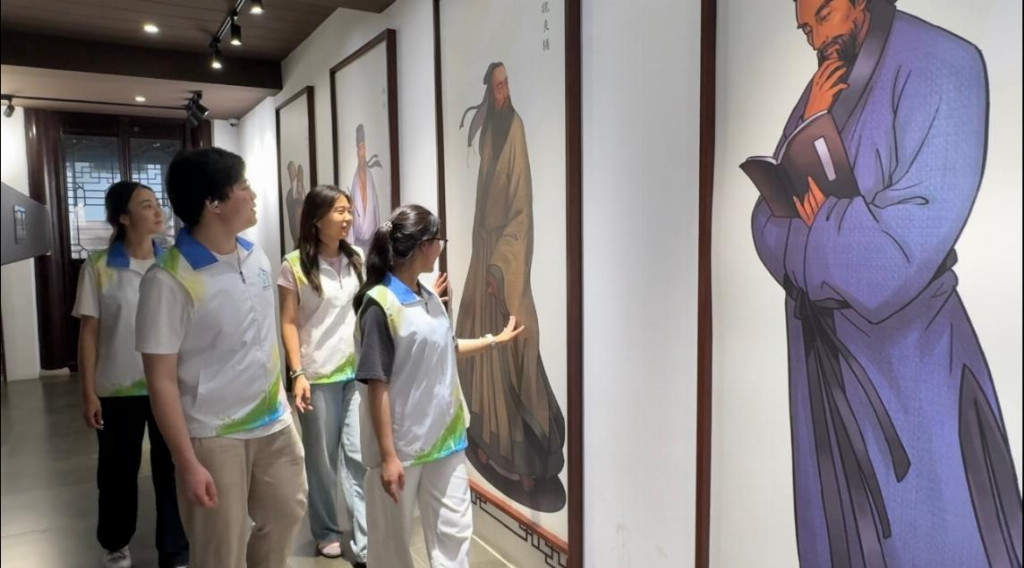 图2实践团成员参观昆曲名家展区
参观结束后,实践团成员围坐一堂,结合此次研学的所见所感畅所欲言。
图2实践团成员参观昆曲名家展区
参观结束后,实践团成员围坐一堂,结合此次研学的所见所感畅所欲言。

B | 大家从昆曲的唱腔之美谈到戏服纹样之巧,从一代代戏曲人的坚守谈到非遗传承的当代路径,言谈间满是对传统艺术的敬意与思考。成员们纷纷表示,此次走进昆曲博物馆,不仅近距离领略了昆曲的独特魅力,更从戏曲人的坚守中读懂了非遗传承背后的文化担当;昆曲戏服上精巧的传统纹样令人印象深刻,传统非遗与纹样艺术的交融,也为今后开展非遗科普实践提供了新的灵感
此次昆曲博物馆研学实践活动圆满开展,为实践团成员上了一堂生动的非遗文化课。从序厅探源到展区观摩,从聆听讲解到围坐畅谈,成员们在昆曲博物馆中全方位感受传统戏曲的艺术魅力与文化底蕴。激励着实践团成员以非遗传承为己任,扛起文化传承的青春责任,在新时代的征程中赓续非遗文脉,用实干与担当书写青春答卷。(供稿人:林茗铮 赵艺榕 许文鑫)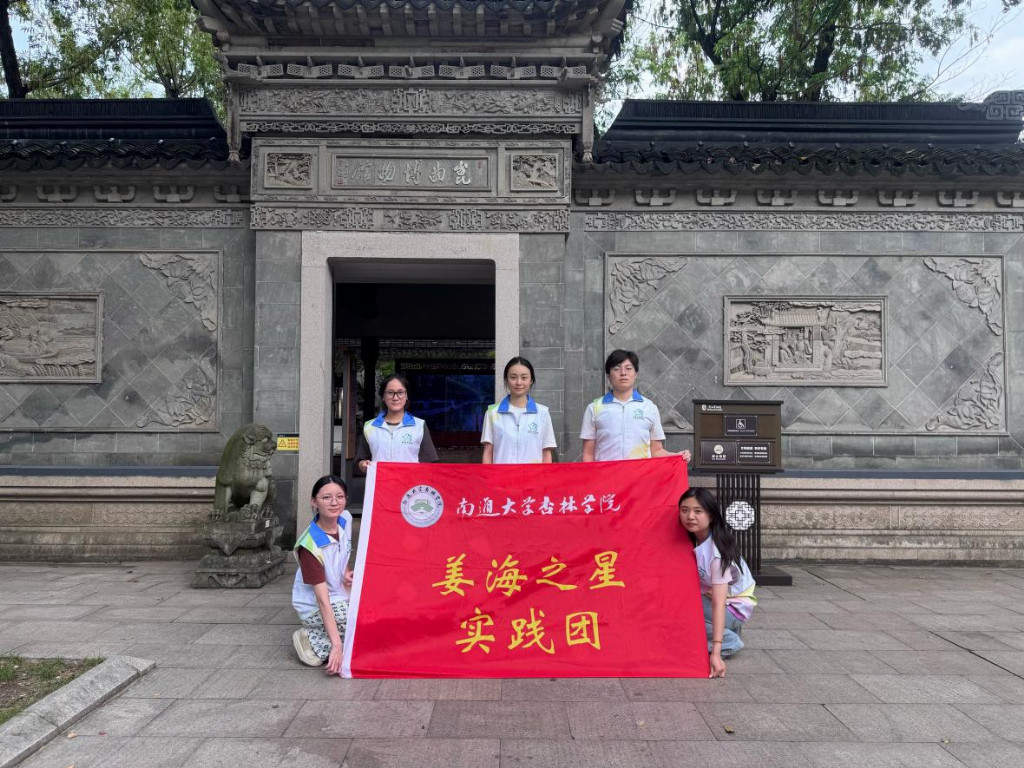 图3姜海之星实践团在昆曲博物馆门前合影【广告】免责声明:本内容为广告,相关素材由广告主提供,本文仅代表作者个人观点,与本网无关。本网发布目的在于传递更多信息,并不代表本网赞同其观点和对其真实性负责,广告内容仅供读者参考,请自行核实相关内容。
Current article:http://47rajw2.wenwancaomohenenqiongpangshun.bond/s5q/20260826/1250.html
Published on:05:18:36
 China-ASEAN Education Week 2026 wraps up in Guiyang, launches AI platform for traditional medicine
 女排亚洲杯赛程出炉 中国女排首战对阵韩国队
 To Have a Healthy School Year, Ensure Everyone Has Access to Immunizations
 明年脑机接口未来产业营收将超50亿元 推进脑机接口产学研联动 浙江出台新措施
 第四届717京东骑行节圆满举行 吸引近2000名骑友参赛
 Russian Ambassador: Indonesia is Making Voices of Developing Countries Heard in G20
- ·이삿짐 사다리차 쓰러져 ‘쿵’…등교 중 8살 어린이 중태
- ·Chinese films shine as summer box office heats up
- ·厦门园博苑上新专属文创和亲子骑行
- ·兽用精神药品随意售卖,制毒不法分子盯上兽用麻醉药品
- ·御港园|童心飞扬,安全护航
- ·CCUS/CCS促进化石能源清洁高效开发及利用研讨会在大连举办,CCUS/CCS促进化石能源清洁高效开发及利用研讨会在大连举办
- ·确成股份:聘任任海燕女士为公司董事会秘书
- ·风力将达峰值,洛杉矶山火或“爆炸性扩大”!骷髅岩跨年夜火灾进入根源调查视野
- ·台风“白海豚”或于今晚到明早在浙江沿海登陆 浙江启动Ⅰ级防台风应急响应
- ·Ranveer Singh Issues Apology After Kantara Controversy
- ·纵览原创|山姆河北首店8月21日开业,记者提前探访:会员制超市有何不一样?
- ·克莱:字母哥不可思议&内线得分历史顶级 他是我加盟热火原因之一
- ·一箭七星 长征六号丙运载火箭发射成功
- ·华立科技等在广州新设创投基金合伙企业
- ·美国出现严重误判,着手切断伊朗经济命脉,伊方:美自断和平后路,兵器集中营,原创 美国出现严重误判,着手切断伊朗经济命脉,伊方:美自断和平后路
- ·【观点】广州期货:PVC供给收缩难抵高库存压制,期价底部震荡
- ·费多拉想改变标志,而这两个设计团队不确定。
- ·新西兰海滩现巨型深海生物尸体:长超4米,游客围观
- ·深圳市大规模“清理”垃圾和共用自行车
- ·今年前7个月霍尔果斯口岸进出口货运量创新高
- ·当院士、校长、企业家坐在一起,为何反复提及这两个字?
- ·美国今秋一罕见病发病率或上升:多发于儿童 严重时危及生命
- ·不影响越野稳定性!全新丰田普拉多将推四缸柴油+48V轻混动力系统
- ·成为自由球员再续约?名记:勇士愿为库里奉上任何他想要的合同
- ·双色球一等奖12注646万元,奖池5.71亿元
- ·斯洛伐克总理遇刺后,袭击者特殊身份被曝光,访华行程或受影响
- ·兴城房地产展示交易会成交额9000万元
- ·【现货】8月26日各地区纯碱现货价格汇总
- ·飞鹤联合多家企业发布创新原料成果 多元复合蛋白原料拓展精准营养全新边界
- ·联讯仪器:上半年净利润5.67亿元,同比增长903%
- ·一顶帐篷一杯咖啡,绘就延边文旅新图景
- ·股价被质疑?投资者犀利发问!4家券商直面回应